UCLA study highlights impact of LGBT Inclusive Education in Scotland
UCLA study highlights impact of LGBT Inclusive Education in Scotland
A new academic study by Dariusz M. Ciszek of the University of California, Los Angeles (UCLA) has provided new evidence on the impact of LGBT Inclusive Education in Scottish primary schools, examining the delivery of our learner workshops.
Published in Social and Emotional Learning: Research, Practice, and Policy (Volume 7), the study represents one of the first empirical analyses globally to explore how LGBT-inclusive learning and teaching operate in practice at the primary level – addressing a significant gap in international research.
The study is based on independent doctoral field research, including classroom observations, interviews with teachers and school staff, and analysis of curriculum materials following sustained engagement with our work in schools.
It was conducted through the University of California, Los Angeles (UCLA) , which is home to one of the world’s leading schools of education, with research internationally respected for its rigour.
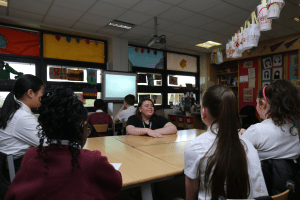
Focusing on Scotland’s National Approach to LGBT Inclusive Education, the study examines how our primary school learner workshops support P6 and P7 classes to engage with issues such as gender stereotypes and homophobic language through structured, classroom-based learning.
Based on empirical evidence, the study's central claim is that TIE’s LGBT-inclusive workshops offer valuable opportunities for students to practice their maturing social and emotional competencies.
Incorporating LGBT content themes into SEL programming also helps educators instruct students about gender-based stereotypes and constructive ways to address homophobia.
A key finding is that learners are supported to translate learning into real-world behaviour. Through scenario-based activities and guided discussion, learners identify how to respond to prejudice-based bullying, including supporting friends and challenging homophobic language in ways that are safe and constructive.
The research shows that learners develop a clearer understanding of the emotional impact of homophobic language and gender stereotypes, alongside increased confidence in supporting their peers and discouraging bullying behaviours.
Wider school-level benefits were also identified, with teachers reporting that the workshops contributed to more respectful classroom environments, providing a shared language for addressing prejudice and supporting positive relationships among learners.
The study finds that our workshops successfully integrate LGBT Inclusive Education with social and emotional learning (SEL), a widely recognised framework for developing learners’ interpersonal and intrapersonal skills.
Across observed lessons, learners were shown to engage with 18 distinct social and emotional competencies, including empathy, perspective-taking, understanding bias, and responsible decision-making – demonstrating that inclusive education can support essential skills development.
The author concludes that Scotland’s approach, delivered in part through our workshops alongside professional learning and curriculum resources, represents a structured and transferable model of LGBT Inclusive Education.
The study positions our pedagogical model and approach to learning as having relevance beyond Scotland, offering a framework that could inform education systems internationally seeking to integrate inclusion with quality learning and teaching.
During a period of education reform in Scotland, with increasing focus on evidence-led practice in education, this research provides a rigorous, independent validation of the role of LGBT Inclusive Education in improving learner wellbeing and supporting essential affective competencies through engaging learning.
The main thing that I learned from the workshop is that it doesn't matter what skin colour you have, what type of hair you have or what type of abilities you have, you are unique in your own way and don't let anyone hurt you.
Pupil
P6
Further Information
We provide three free primary school workshops across Scotland, taking a preventative approach to prejudice-based bullying – complementing our more advanced programme for secondary schools.
By upper primary, learners are already exposed to gender stereotypes and homophobic language. Our workshops support early intervention: exploring difference positively, challenging gender stereotypes, and addressing the use of “gay” as an insult through scenario-based, learner-led content.
Designed and delivered by qualified teachers, through co-production with P6 and P7 classes, the content is suitable for the age and stage of learners and connects to the core curriculum.
After taking part, 97% of primary school pupils reported that they now understood what to do if they saw or experienced bullying at school.
To provide the best experiences, we use technologies like cookies to store and/or access device information. Consenting to these technologies will allow us to process data such as browsing behavior or unique IDs on this site. Not consenting or withdrawing consent, may adversely affect certain features and functions.
Functional
Always active
The technical storage or access is strictly necessary for the legitimate purpose of enabling the use of a specific service explicitly requested by the subscriber or user, or for the sole purpose of carrying out the transmission of a communication over an electronic communications network.
Preferences
The technical storage or access is necessary for the legitimate purpose of storing preferences that are not requested by the subscriber or user.
Statistics
The technical storage or access that is used exclusively for statistical purposes.The technical storage or access that is used exclusively for anonymous statistical purposes. Without a subpoena, voluntary compliance on the part of your Internet Service Provider, or additional records from a third party, information stored or retrieved for this purpose alone cannot usually be used to identify you.
Marketing
The technical storage or access is required to create user profiles to send advertising, or to track the user on a website or across several websites for similar marketing purposes.