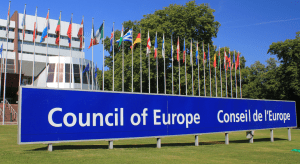
Council of Europe experts praise LGBT Inclusive Education in Scotland
Council of Europe experts praise LGBT Inclusive Education in Scotland
The latest report on the UK by the European Commission against Racism and Intolerance (ECRI) has commended Scotland’s approach to LGBT Inclusive Education.
The European Commission against Racism and Intolerance (ECRI), established by the Council of Europe, is an independent human rights monitoring body specialised in questions relating to the fight against racism, discrimination, xenophobia, antisemitism, and intolerance. Its members are independent, impartial, and appointed based on their authority and recognised expertise.
ECRI conducts country monitoring work which analyses the situation in each of the member states of the Council of Europe in addressing racism and intolerance while providing recommendations and proposals.
In its sixth round country report, the ECRI focused on topics including effective equality and access to rights, hate speech and hate-motivated violence, and integration and inclusion.
ECRI considers the embedding of LGBT inclusive education in schools in Scotland, including with the help of specialised NGOs, a good practice.
The new report included a series of recommendations for the UK, including the adoption of an LGBTI action plan for England and improvements to the provision of support for refugees and asylum seekers.
Education initiatives in Scotland were specifically highlighted and welcomed, including the national approach to LGBT Inclusive Education, Education Scotland’s Building Racial Literacy Programme, and the opportunities for children and young people to receive human rights education provided for within Curriculum for Excellence.
The NGO TIE has developed materials on LGBT issues in subjects such as mathematics (for example, the study of Alan Turing) and science.
The Scottish authorities have introduced and funded LGBT inclusive education in Scotland. There is an expectation for all local authorities running early learning centres, primary and secondary schools to embed LGBT inclusive education across the curriculum. Resources to deliver LGBT inclusive education include lesson plans, an implementation and evaluation toolkit for schools and a basic awareness e-learning for school staff.
Relationships, sexual health and parenthood learning within the health and well-being area of the curriculum is inclusive of same sex relationships and teaches about gender stereotypes and trans identities. The NGO TIE has developed materials on LGBT issues in subjects such as mathematics (for example, the study of Alan Turing) and science. Castleton Primary School in Glasgow is reportedly the first primary school to fully embed LGBT inclusive education across the school curriculum.
ECRI considers the embedding of LGBT inclusive education in schools in Scotland, including with the help of specialised NGOs, a good practice.
The ECRI highlighted Scotland’s approach to LGBT Inclusive Education as an example of good practice and commended the involvement of our charity as a specialised nongovernmental organisation in supporting this area of work.
The report made additional recommendations to improve the consistency of recording anti-LGBT and racist bullying incidents in schools, including those that occur using online platforms.
For Scotland's pioneering approach to LGBT Inclusive Education to be commended by Council of Europe experts in an international report of this stature is significant.
We met with experts from the European Commission against Racism and Intolerance (ECRI) during their member state visit to the UK to provide detailed information about our work, share resources, and answer questions.
Following this scrutiny, ECRI's latest report has praised LGBT Inclusive Education in Scotland as an example of good practice for Council of Europe member states.
With school pupils today increasingly exposed to disinformation, prejudice, and hate on social media, the classroom has to be a safe learning environment where they can learn about the world around them and the diverse communities in our society.
We hope that this recognition will encourage other member states to develop education initiatives addressing anti-LGBT prejudice at school and ensuring that all school pupils see themselves and their families reflected in their learning.
Jordan Daly, Co-Founder/Director of TIE
The ECRI Report on the United Kingdom (sixth monitoring cycle) was published in October 2024 and can be accessed via the Council of Europe.
More information about our work with schools, including professional learning and curriculum resources, can be found on the Teachers section of our website.
To provide the best experiences, we use technologies like cookies to store and/or access device information. Consenting to these technologies will allow us to process data such as browsing behavior or unique IDs on this site. Not consenting or withdrawing consent, may adversely affect certain features and functions.
Functional
Always active
The technical storage or access is strictly necessary for the legitimate purpose of enabling the use of a specific service explicitly requested by the subscriber or user, or for the sole purpose of carrying out the transmission of a communication over an electronic communications network.
Preferences
The technical storage or access is necessary for the legitimate purpose of storing preferences that are not requested by the subscriber or user.
Statistics
The technical storage or access that is used exclusively for statistical purposes.The technical storage or access that is used exclusively for anonymous statistical purposes. Without a subpoena, voluntary compliance on the part of your Internet Service Provider, or additional records from a third party, information stored or retrieved for this purpose alone cannot usually be used to identify you.
Marketing
The technical storage or access is required to create user profiles to send advertising, or to track the user on a website or across several websites for similar marketing purposes.